
CLEAR Global Glossaries
In humanitarian response, field workers must communicate important, sometimes life-saving information to those in need. In many cases, the critical link to ensuring affected people understand is the interpreter. However, too often, that link is broken, either because concepts do not translate well into the target language or because the interpreter does not have the […]
Guide – How to hold organizations accountable for their use of digital technology
This guide is intended to support crisis-affected community members to hold humanitarian organizations accountable for their safe and responsible use of digital technology. This technology may be newly developed digital tools or existing tools combined in new ways. It includes innovations in the early stages of development and more mature and established solutions ready to […]
Human-Centred Technology Design in Humanitarian Action
Guides on co-creating digital tools with crisis-affected people On this page, you will find two essential guides on Human-Centred Technology Design in Humanitarian Action. These resources, developed by CLEAR Global, are part of an initiative funded by the UK Humanitarian Innovation Hub (UKHIH) aimed at establishing participatory and community driven approaches for developing digital technology […]
Guide – Co-creating digital tools with crisis-affected people
Human-Centred Technology Design in Humanitarian Action: A guide to co-creating digital tools with crisis-affected people Developed by CLEAR Global and the United Kingdom Humanitarian Innovation Hub, this guide introduces human-centred design for humanitarian settings, highlighting ethical, inclusive, and participatory approaches to developing digital tools. It outlines key stakeholders, explores the responsible use of emerging technologies, […]
Guide – A deep dive into the fundamentals of co-creating digital tools with crisis-affected people
Human-Centred Technology Design in Humanitarian Action: A deep dive into the fundamentals of co-creating digital tools with crisis-affected people Developed by CLEAR Global and the United Kingdom Humanitarian Innovation Hub, this companion guide explores five key principles for co-creating digital tools with communities: trust, two-way communication, digital skills, data protection, and inclusiveness. Drawing on research […]
Communicating for trust – AAP and PSEAH in northeast Nigeria
Communicating for trust – AAP and PSEAH in northeast Nigeria Accountability to affected people (AAP) is fundamental in humanitarian efforts. We aim to ensure that the voices and concerns of affected people are not only heard but also taken into account in decision-making. In the context of northeast Nigeria, where conflict and displacement have created […]
Language use in Somalia: research report
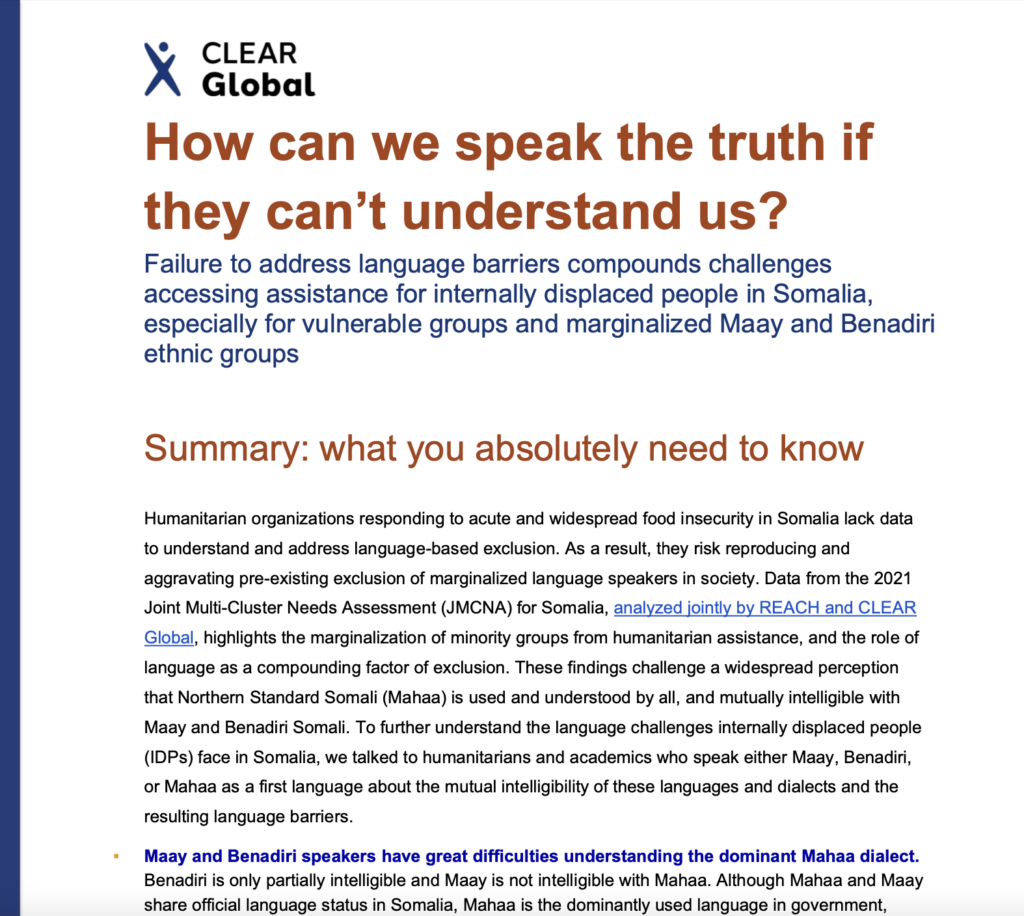
Humanitarian organizations responding to acute and widespread food insecurity in Somalia lack data to understand and address language-based exclusion. Read our report and recommendations for responding organizations – click to view and download (English). Together with Minority Rights Group International and others, we also researched how far Maay Somali speakers understand critical health information in […]
Pakistan Languages, Flood Risks, and Cellphone Infrastructure – key insights
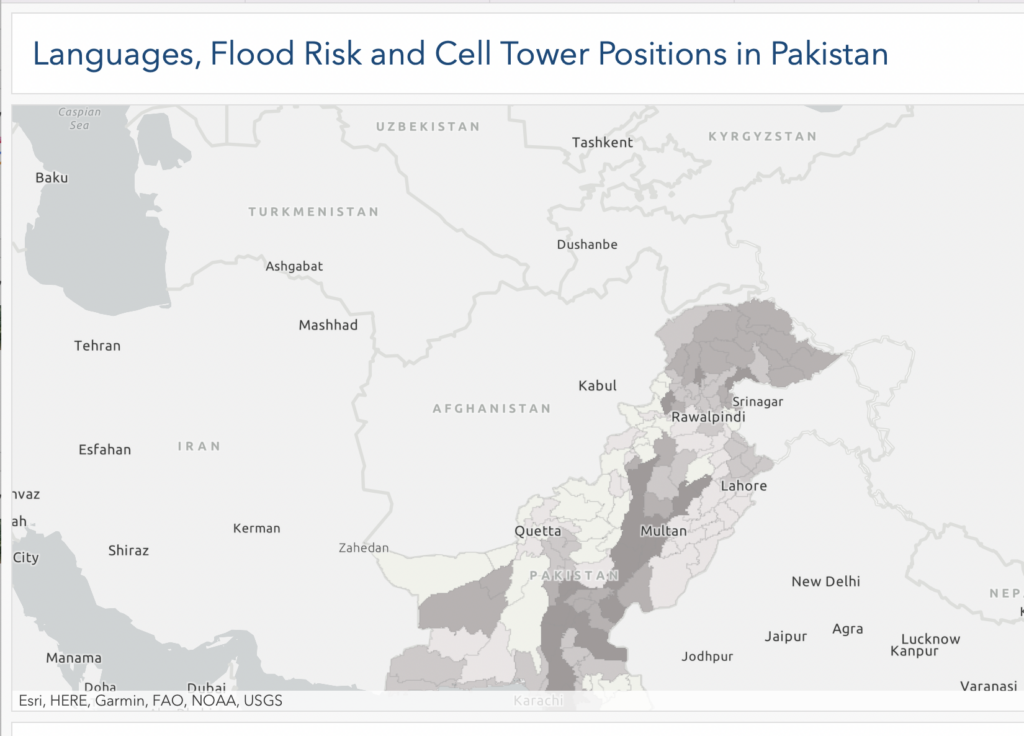
Areas at high risk of flooding face varied language and communication challenges. To inform better planning and response, we compiled data on flood risk, cell phone infrastructure and language use in an interactive map that highlights important gaps and barriers to effective communication with at-risk populations. Read key insights here.
Language use in Somalia: Quantitative research findings
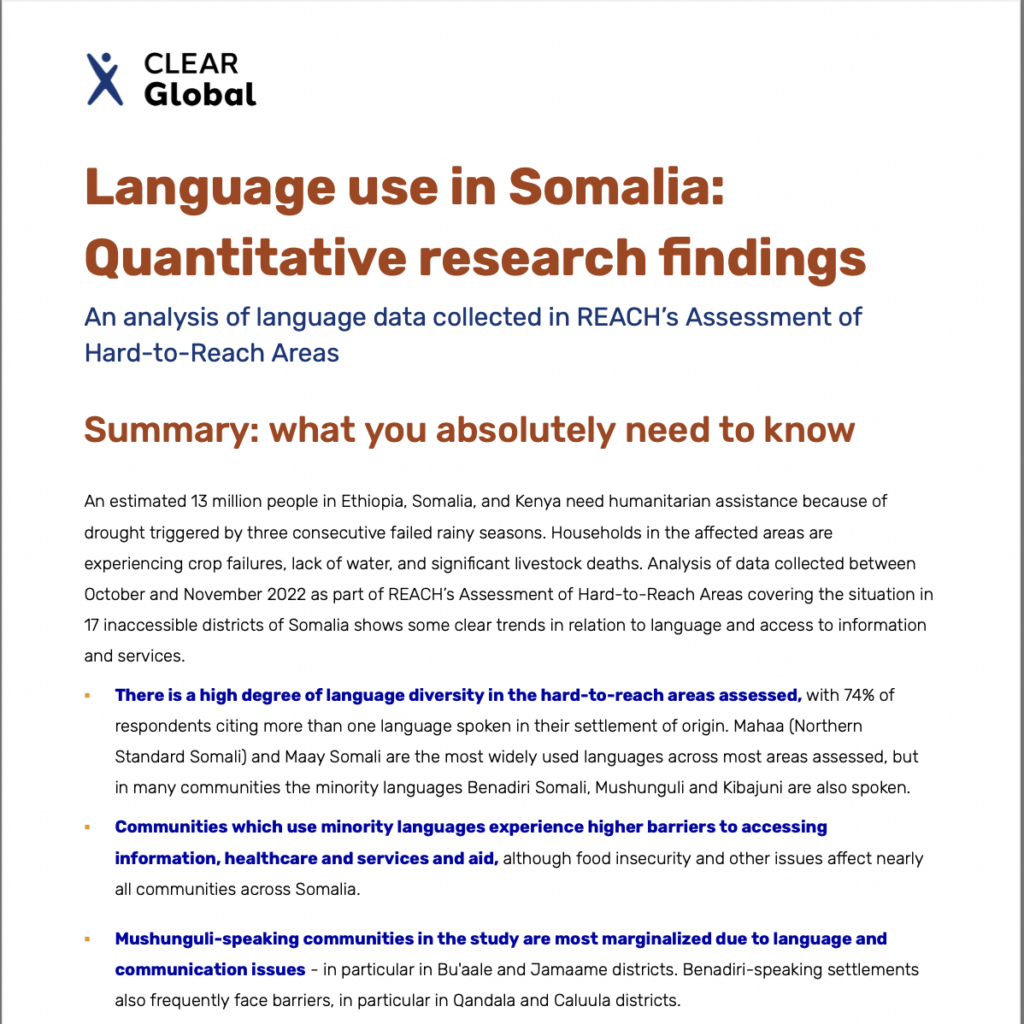
An analysis of language data collected in REACH’s Assessment of Hard-to-Reach Areas in Somalia. Click to read and download the report in English. These findings challenge a widespread perception that Northern Standard Somali (Mahaa) is used and understood by all, and mutually intelligible with Maay and Benadiri Somali. To further understand the language challenges internally displaced […]
Improving access and trust in humanitarian complaints and feedback systems in northeast Nigeria: research brief
Technology could be part of the solution to current language, trust and confidentiality barriers in northeast Nigeria and Beyond. Read CLEAR Global’s research brief and recommendations for humanitarian organizations – click to view and download (English). We heard from internally displaced people (IDPs) and humanitarians in northeast Nigeria onhow complaints and feedback mechanisms currently work. […]