From words to impact: an evaluation of CLEAR Global’s work in northeast Nigeria from 2017 to 2025
This report presents an evaluation of our northeast Nigeria program between 2017 and 2025. The program is on standby as of June 2025 due to budget constraints and the global downscaling of humanitarian efforts. This assessment examines eight years of efforts to bridge communication gaps and improve language access for marginalized communities in one of […]
Communicating for trust – AAP and PSEAH in northeast Nigeria
Communicating for trust – AAP and PSEAH in northeast Nigeria Accountability to affected people (AAP) is fundamental in humanitarian efforts. We aim to ensure that the voices and concerns of affected people are not only heard but also taken into account in decision-making. In the context of northeast Nigeria, where conflict and displacement have created […]
Improving access and trust in humanitarian complaints and feedback systems in northeast Nigeria: research brief
Technology could be part of the solution to current language, trust and confidentiality barriers in northeast Nigeria and Beyond. Read CLEAR Global’s research brief and recommendations for humanitarian organizations – click to view and download (English). We heard from internally displaced people (IDPs) and humanitarians in northeast Nigeria onhow complaints and feedback mechanisms currently work. […]
Learning review research for TWB trained community-based interpreters in Nigeria
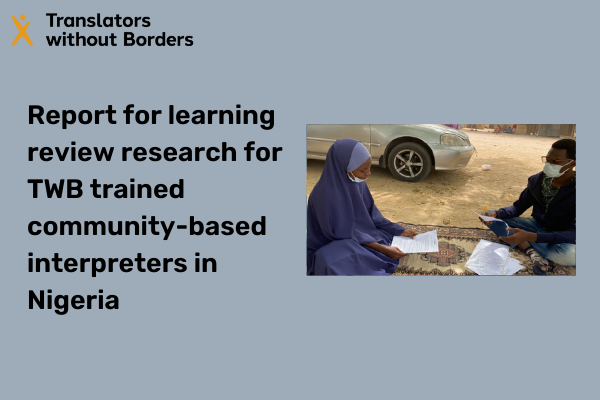
View this research report in a new window here.
In the loop: developing effective complaints and feedback mechanisms
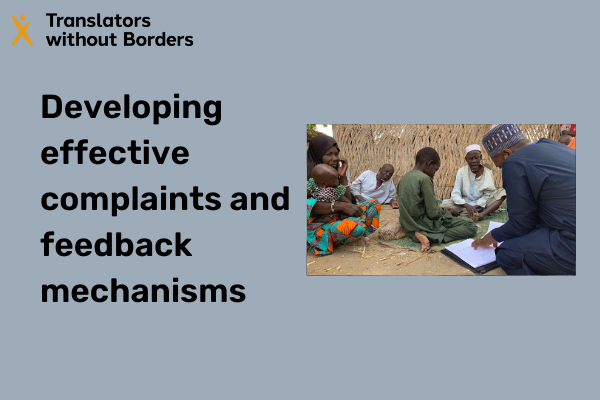
Complaints and feedback mechanisms are an essential part of the humanitarian community’s ability to be held accountable for the assistance and protection we deliver. You can view our research brief below or here. Also is available an illustrated version created to guide you through.
Complaint and feedback mechanisms: Effective communication is essential for true accountability
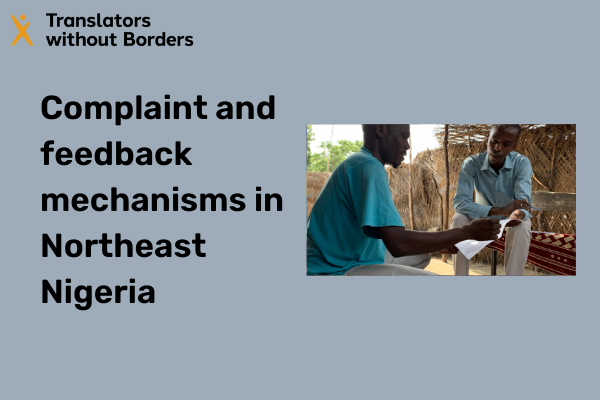
This report summarizes key findings and recommends actions to improve accountability in Northeast Nigeria through more effective and responsive complaint and feedback mechanisms. TWB found that humanitarian organizations are largely prioritizing verbal communication in a context of low literacy, particularly among women and older people. A reliance on spoken Hausa and written English (including for […]
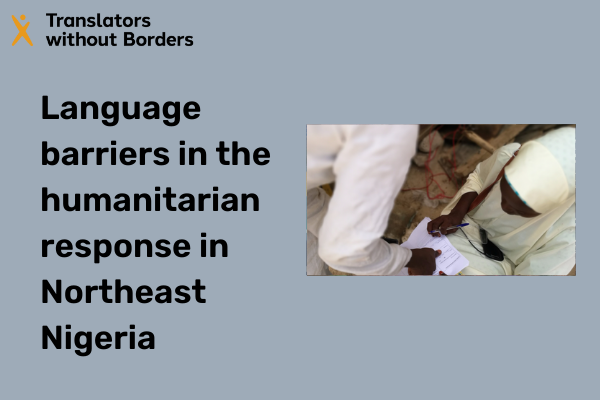
Language barriers in the humanitarian response in Northeast Nigeria
The words between us: How well do enumerators understand the terminology used in humanitarian surveys?
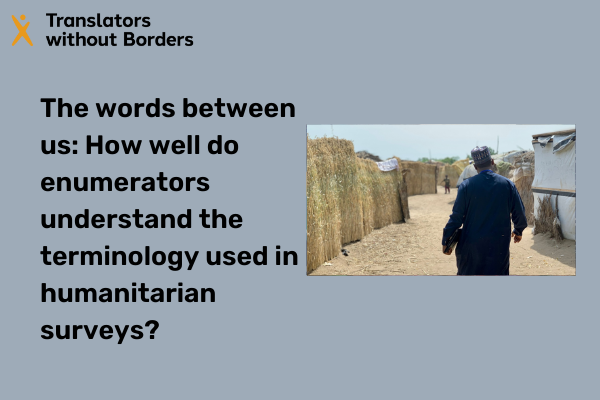
Data collection is the foundation of humanitarian programs, informing humanitarian response plans, program design, and safeguarding measures. If the data is inaccurate, humanitarian action may be misconceived, unaccountable, inefficient, and ultimately lacking in impact for those most in need. Language plays a critical but largely overlooked part in data quality. Translators without Borders (TWB) is […]
Language matters: Improving accountability and operational effectiveness in Northeast Nigeria
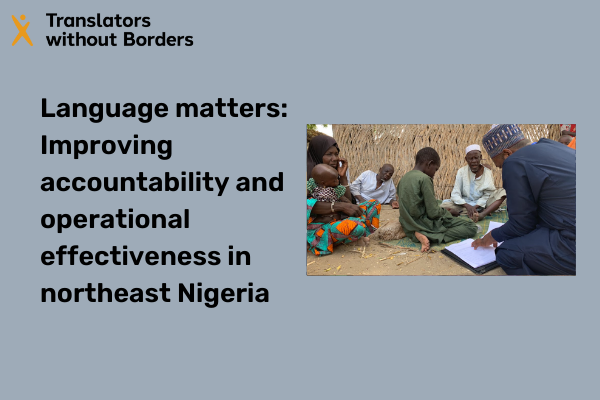
MSNA language data can help humanitarians communicate better with affected people