
Communicating about gender and violence in Ukraine
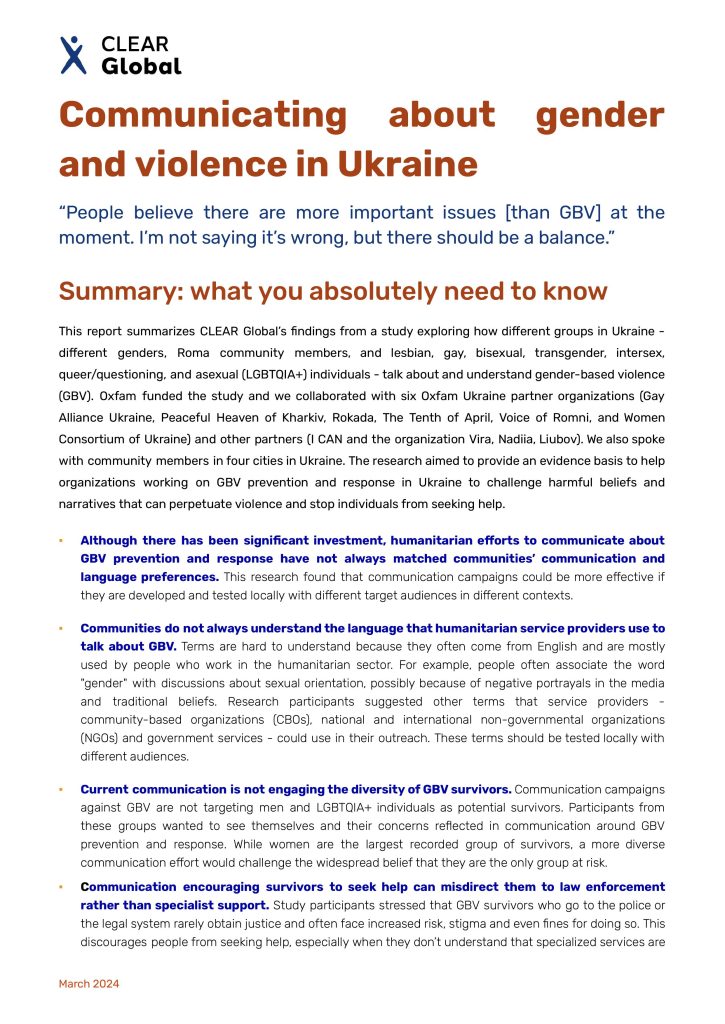
Communicating about gender and violence in Ukraine In situations of conflict, the risk of gender-based violence (GBV) can increase and survivors need to know how and where to find help. Clear, appropriate and safe communication from service providers is critical to ensure people can find the services they need and talk about what they experienced. […]
Improving access and trust in humanitarian complaints and feedback systems in northeast Nigeria: research brief
Technology could be part of the solution to current language, trust and confidentiality barriers in northeast Nigeria and Beyond. Read CLEAR Global’s research brief and recommendations for humanitarian organizations – click to view and download (English). We heard from internally displaced people (IDPs) and humanitarians in northeast Nigeria onhow complaints and feedback mechanisms currently work. […]
Finding the right words: PSEAH terminology testing in Dohuk and Kirkuk, Iraq
In partnership with the International Organization for Migration, we developed a glossary of terms on preventing sexual exploitation, abuse and harassment in three Kurdish dialects: Sorani, Badini, and Kurmanji. As part of the glossary development, CLEAR Global and IOM conducted focus group discussions (FGDs) to test comprehension of sensitive and potentially confusing PSEAH-related terms. FGDs […]
Localized communication minimizes the impact of Ebola in DRC
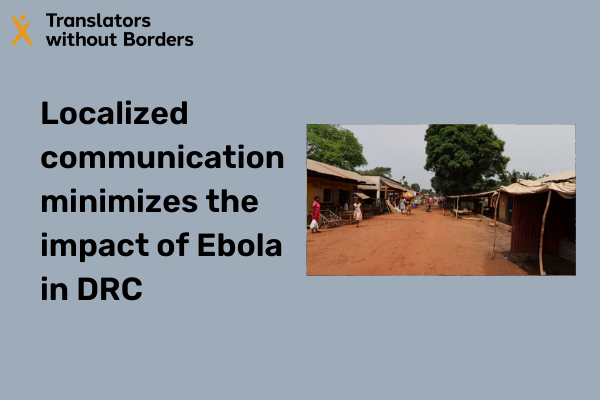
The response to the 11th Ebola outbreak in the Democratic Republic of Congo (DRC) proved the merits of local, multilingual communication with communities. TWB’s research found significant progress compared with the response to the 10th outbreak, and to the many humanitarian emergencies that have affected DRC to date. However, our research also highlighted the need […]
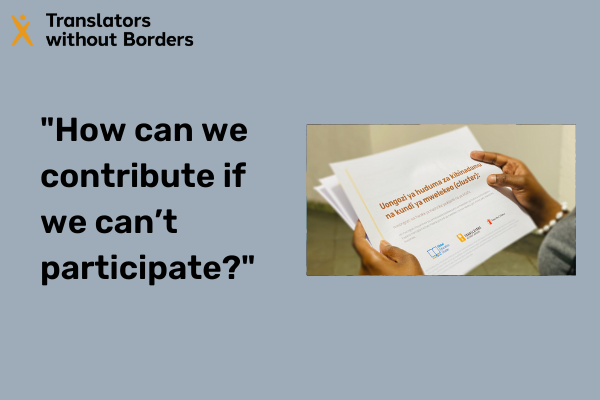
“How can we contribute if we can’t participate?” The accessibility of humanitarian guidance to local and national organisations
PSEA recommendations: Language issues for safeguarding
TWB’s research shows that a language sensitive response to Ebola outbreaks could improve understanding and trust in key messages. It will enhance the accessibility of RCCE and AAP mechanisms, including the reporting of SEAH and support to survivors. Learning from the outbreak in DRC, TWB would recommend the actions to take as part of protection […]
Πληροφόρηση δίχως κατανόηση, δικαιώματα δίχως νόημα
Έκθεση των συμπερασμάτων ως προς το θέμα της γλώσσας στην Παγκόσμια Συμφωνία για τη Μετανάστευση και τους Πρόσφυγες (Global Compact on Refugees and Migration) του ΟΗΕ. Κατεβάστε εδώ. (Διατίθεται επίσης στα αγγλικά, τα ιταλικά, τα γαλλικά και τα ισπανικά.)
Informations sans compréhension, droits sans signification
Document de synthèse traitant des problèmes de langue dans l’application du programme des Nations Unies dans les pactes mondiaux sur les réfugiés et les migrants. Télécharger ici. (Ce document est également disponible en langue anglaise, italienne, espagnole et grecque.)
Informazioni senza comprensione, diritti senza significato
Documento di sintesi che affronta la questione della lingua nei Global Compact promossi dalle Nazioni Unite per i rifugiati e i migranti. Scaricalo qui. (Disponibile anche in inglese, greco, francese e spagnolo.)
Información que no se entiende, derechos que no significan nada
Documento de posición que aborda la cuestión del idioma en el Pacto Mundial de las Naciones Unidas sobre refugiados e inmigración. Descargar aquí. (También se encuentra disponible en inglés, italiano, francés y griego.)