Gamayun: The Language Equality Initiative
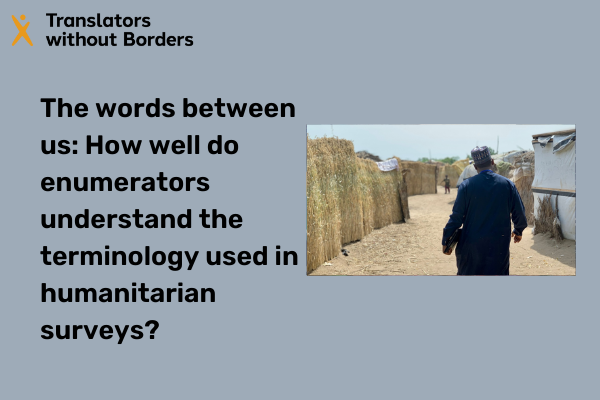
The words between us: How well do enumerators understand the terminology used in humanitarian surveys?
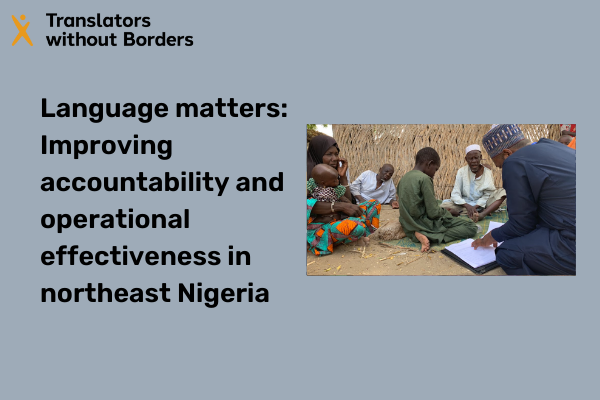
Data collection is the foundation of humanitarian programs, informing humanitarian response plans, program design, and safeguarding measures. If the data is inaccurate, humanitarian action may be misconceived, unaccountable, inefficient, and ultimately lacking in impact for those most in need. Language plays a critical but largely overlooked part in data quality. Translators without Borders (TWB) is […]
Language matters: Improving accountability and operational effectiveness in Northeast Nigeria
The language lesson: What we’ve learned about communicating with Rohingya refugees
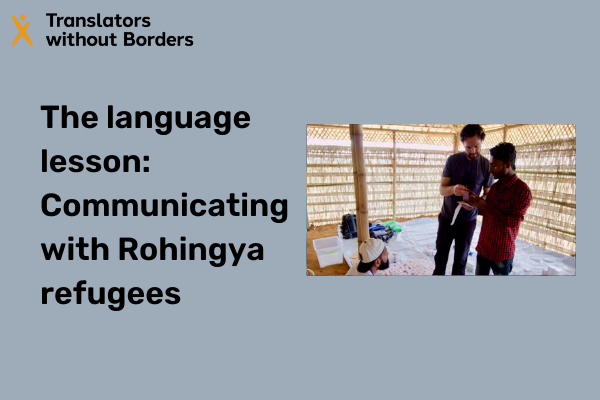
Rohingya refugees have a right to information and two-way communication in their own language, in a format they understand, and through channels they prefer and trust. In the past year, access to information has improved in the Rohingya refugee response as a result of an increased humanitarian focus on communicating with communities. Yet language barriers […]
What Matters? Humanitarian Feedback bulletin
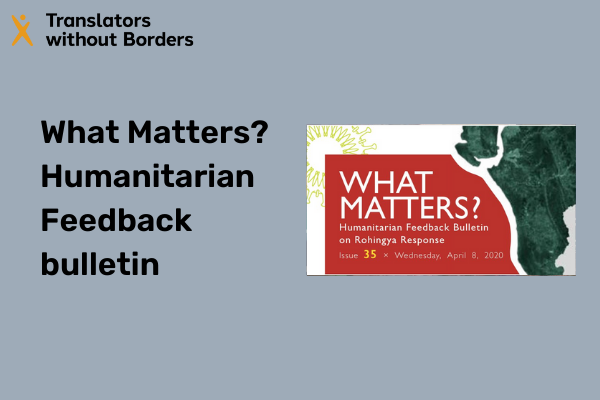
BBC Media Action, Internews, and Translators without Borders are working together to improve two-way communication between the Rohingya refugees, the host communities, and the humanitarian actors. What Matters? provides a snapshot of feedback received from affected community members, to assist sectors to better plan and implement relief activities with communities’ needs and preferences in mind. […]
Philippines Super Typhoon Mangkhut (“Ompong”) – Crisis language map
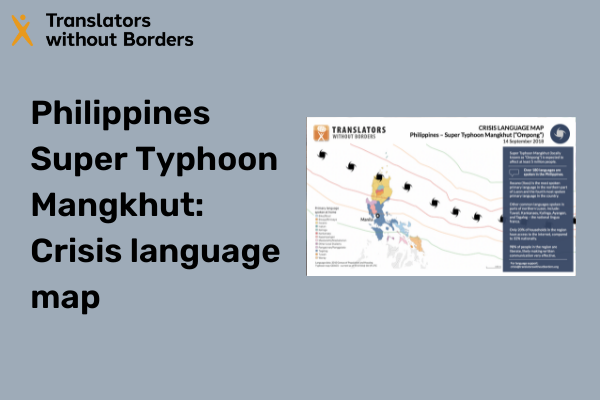
In the early hours of 15 September 2018, Typhoon Mangkhut struck the Philippines, with the eye of the storm crossing Luzon, the country’s largest and most populous island. The storm, locally known as Ompong, primarily impacted the northern Cagayan Province, including the towns of Baggao and Lasam, with sustained winds of 120 miles per hour […]
Rapid Guide to Localizing and Translating Survey Tools [PT]
Rapid Guide to Localizing and Translating Survey Tools [FR]
Rapid Guide to Localizing and Translating Survey Tools [EN]
How to download TWB’s WASH glossary to your Android or iOS device [Bangla]