
Tackling language-based exclusion in the Horn of Africa hunger crisis: Lessons from Somalia
Facing the worst droughts in over 40 years, more than 37 million people in the Horn of Africa are experiencing acute hunger. They need urgent humanitarian aid – healthcare, food, water supplies, and lifesaving information in the right language. CLEAR Global and REACH studied how language affects effective humanitarian response in the Horn of Africa […]
Finding the right words: PSEAH terminology testing in Dohuk and Kirkuk, Iraq
In partnership with the International Organization for Migration, we developed a glossary of terms on preventing sexual exploitation, abuse and harassment in three Kurdish dialects: Sorani, Badini, and Kurmanji. As part of the glossary development, CLEAR Global and IOM conducted focus group discussions (FGDs) to test comprehension of sensitive and potentially confusing PSEAH-related terms. FGDs […]
Majhis’ role in sharing information in the camps
View our Majhis’ role in sharing information in the camps research report in a new tab here.
Imams’ role as sharers of information in the camps
View our Imams’ role as sharers of information in the camps research report in a new tab here.
Complaint and feedback mechanisms are missing the voices of women and people with restricted mobility
View our Complaint and feedback mechanisms are missing the voices of women and people with restricted mobility research report in a new tab here.
How Rohingya people think and talk about mental health
. View our How Rohingya people think and talk about mental health research report in a new tab here.
Rohingya information preferences and perspectives
View the Rohingya information preferences and perspectives research report in a new tab here.
Learning review research for TWB trained community-based interpreters in Nigeria
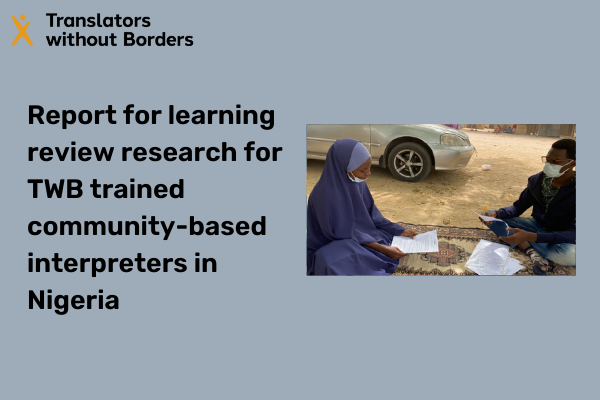
View this research report in a new window here.
Localized communication minimizes the impact of Ebola in DRC
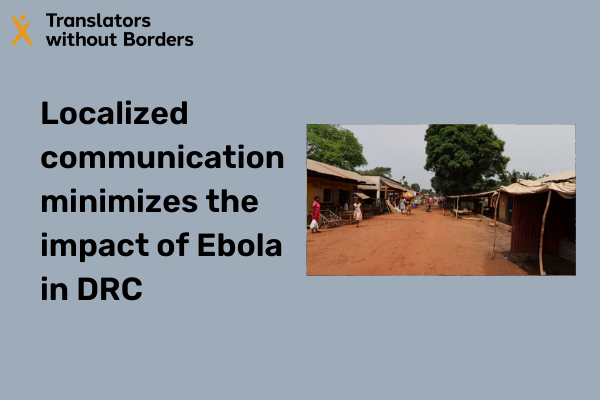
The response to the 11th Ebola outbreak in the Democratic Republic of Congo (DRC) proved the merits of local, multilingual communication with communities. TWB’s research found significant progress compared with the response to the 10th outbreak, and to the many humanitarian emergencies that have affected DRC to date. However, our research also highlighted the need […]
In the loop: developing effective complaints and feedback mechanisms
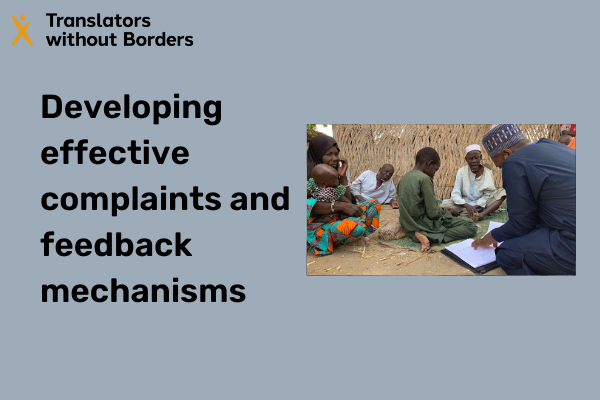
Complaints and feedback mechanisms are an essential part of the humanitarian community’s ability to be held accountable for the assistance and protection we deliver. You can view our research brief below or here. Also is available an illustrated version created to guide you through.