
Language guidance for communicating about COVID-19 in Northeast Nigeria
What Matters? Humanitarian Feedback bulletin
BBC Media Action, Internews, and Translators without Borders are working together to improve two-way communication between the Rohingya refugees, the host communities, and the humanitarian actors. What Matters? provides a snapshot of feedback received from affected community members, to assist sectors to better plan and implement relief activities with communities’ needs and preferences in mind. […]
Language barriers in the humanitarian response in Northeastern Nigeria – initial assessment
Discussing WASH in the Rohingya language: Building a better dialogue around water, sanitation, and hygiene (WASH) issues [Bangla]
Download or view in a new tab our Rohingya WASH language guide here.
Discussing WASH in the Rohingya language: Building a better dialogue around water, sanitation, and hygiene (WASH) issues [English]
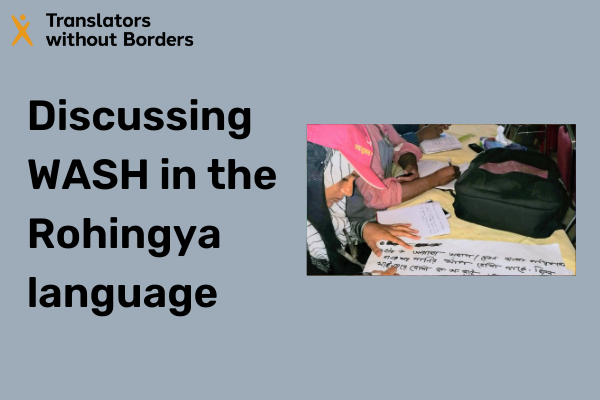
Download or view in a new tab our Rohingya WASH language guide here.
Discussing disability in the Rohingya language
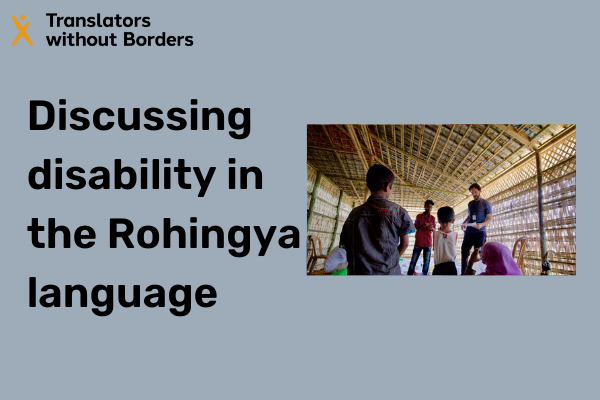
Download or view in a new tab our Rohingya disability language guide here.
Discussing nutrition in the Rohingya language
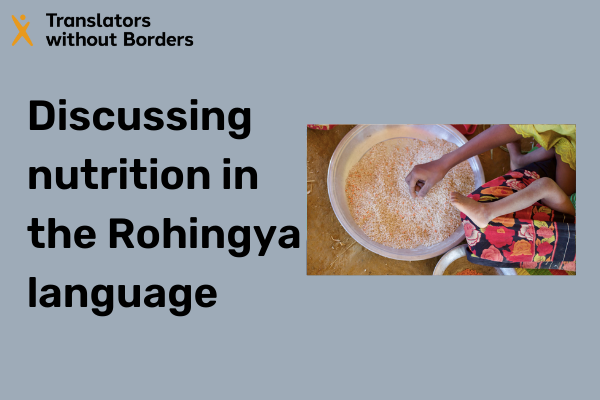
Download or view in a new tab our Rohingya nutrition language guide here.
A healthy discussion: Rohingya language guidance for healthcare workers
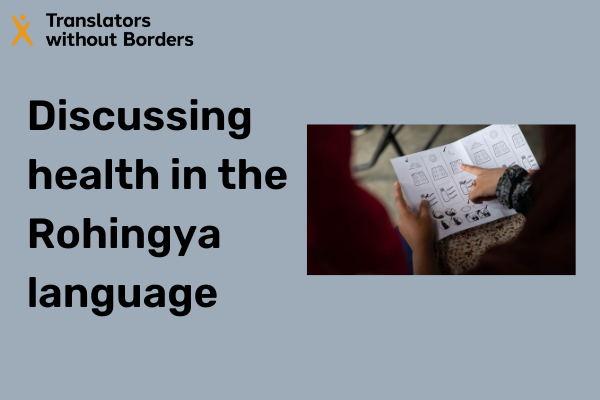
TWB glossary for COVID-19

We are identifying key terminology that people use to talk about COVID-19 as well as commonly used technical terms to develop a multilingual, plain-language glossary. The glossary is designed to assist field workers and interpreters engaging with communities to raise awareness about COVID-19. It aims to improve communication between responders and affected communities by providing […]
Effective Ebola risk communication requires respect and transparency and remains as vital as ever
This qualitative study evaluates the challenges of communicating about Ebola in the town of Beni, North Kivu. With its approximately 250,000 residents, Beni has been one of the towns hardest hit by the epidemic declared in August 2018. In the second year of the current Ebola outbreak, effective risk communication remains as vital as ever. […]