
2024 Mpox outbreak response: How to address language and communication barriers to maximize the reach of mpox risk communication
Download this brief as a pdf. In a public health emergency, people need clear, accessible communication to take action and keep themselves safe. But a lack of language awareness can harm the reach and effectiveness of the response. As learning from the Covid-19 and Ebola responses has shown, language and communication barriers: Reduce access to […]
Building trust in epidemic response – health communication in western Uganda
Building trust in epidemic response – health communication in western Uganda In May 2021, Translators without Borders conducted sociolinguistic research on health communication on Ebola and COVID-19 in three districts in western Uganda – Hoima, Kasese, and Kisoro. We found that regular, clear, and thoughtful communication on diseases can reduce stigma and increase trust, and […]
Why language inclusion matters for sexual and reproductive health and rights (SRHR)
Why language inclusion matters for sexual and reproductive health and rights (SRHR) Effective SRHR services support the right to health, promote gender equality, and reduce vulnerability for people experiencing marginalization. Yet without language awareness, these services never reach some of those most in need. Download the document.
Rohingya cultural perceptions of health
Rohingya healing involves diverse providers to meet physical, spiritual, and mental health needs Health is a vital part of our overall well-being. However, there is often little room to accommodate different understandings of health, illness, the body, and the mind in health care services. These different understandings can lead to miscommunication and frustrated interactions between […]
Language use in Somalia: Quantitative research findings
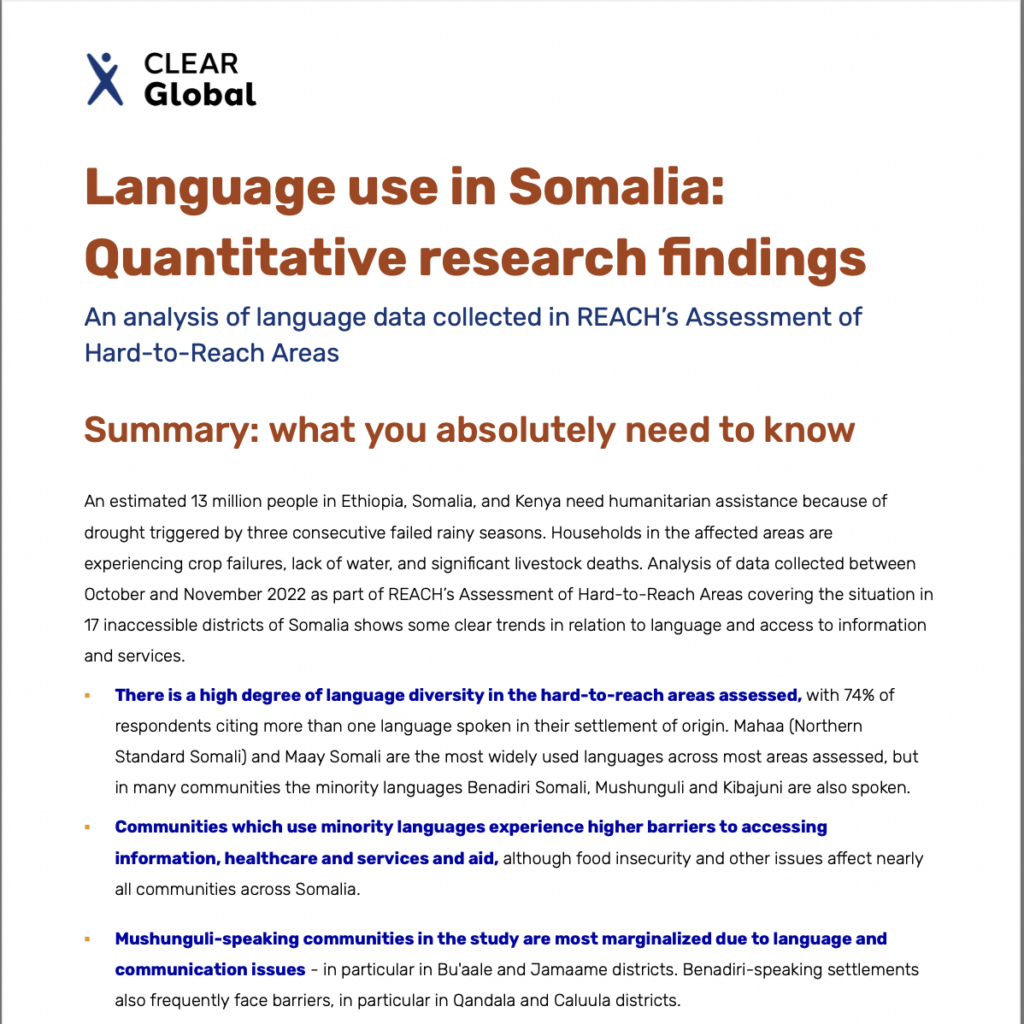
An analysis of language data collected in REACH’s Assessment of Hard-to-Reach Areas in Somalia. Click to read and download the report in English. These findings challenge a widespread perception that Northern Standard Somali (Mahaa) is used and understood by all, and mutually intelligible with Maay and Benadiri Somali. To further understand the language challenges internally displaced […]
Hospital cleaner as interpreter: language and cultural awareness in Rohingya access to health care
View our Hospital cleaner as interpreter – language and cultural awareness in Rohingya access to health care report in a new tab here.
Bridging community and humanitarian approaches to sexual and reproductive health in Rohingya communities
View our Bridging community and humanitarian approaches to sexual and reproductive health in Rohingya communities report in a new tab here.
Fat and healthy – Rohingya parents’ knowledge of child nutrition
View our Fat and healthy – Rohingya parents’ knowledge of child nutrition report in a new tab here.
How Rohingya people think and talk about mental health
. View our How Rohingya people think and talk about mental health research report in a new tab here.
Bangladesh and Myanmar: language needs across borders
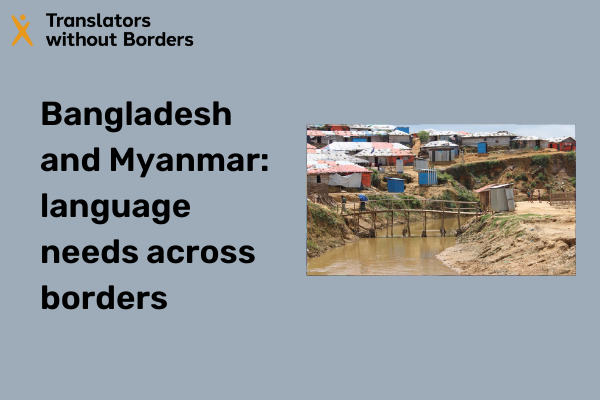
The Rohingya are marginalized in Myanmar society, as reflected in their lack of legal status and recognition as citizens. Across the border in Bangladesh, they are also unable to participate fully in society due to their lack of legal status and recognition as refugees. In both contexts, language barriers reinforce that exclusion. In March 2019, […]