
Chichewa synthetic voice dataset, TTS models, ASR models
Below is a curated collection of open resources for text-to-speech (TTS), automatic speech recognition (ASR), and synthetic voice datasets in the Chichewa language. Text-to-Speech (TTS) Models Explore our collection of Chichewa TTS models, including XTTS and other multilingual models fine-tuned for natural-sounding Chichewa speech. View Chichewa TTS Models on Hugging Face Automatic Speech Recognition (ASR) Models […]
Hausa synthetic voice dataset, TTS models, ASR models
Below is a curated collection of open resources for text-to-speech (TTS), automatic speech recognition (ASR), and synthetic voice datasets in the Hausa language. Text-to-Speech (TTS) Models Explore our collection of Hausa TTS models, including XTTS and other multilingual models fine-tuned for natural-sounding Hausa speech. View Hausa TTS Models on Hugging Face Automatic Speech Recognition (ASR) […]
Dholuo synthetic voice dataset, TTS models, ASR models
Below is a curated collection of open resources for text-to-speech (TTS), automatic speech recognition (ASR), and synthetic voice datasets in the Dholuo language. Text-to-Speech (TTS) Models Explore our collection of Dholuo TTS models, including XTTS and other multilingual models fine-tuned for natural-sounding Dholuo speech. View Dholuo TTS Models on Hugging Face Automatic Speech Recognition (ASR) […]
From words to impact: an evaluation of CLEAR Global’s work in northeast Nigeria from 2017 to 2025
This report presents an evaluation of our northeast Nigeria program between 2017 and 2025. The program is on standby as of June 2025 due to budget constraints and the global downscaling of humanitarian efforts. This assessment examines eight years of efforts to bridge communication gaps and improve language access for marginalized communities in one of […]
Building trust in epidemic response – health communication in western Uganda
Building trust in epidemic response – health communication in western Uganda In May 2021, Translators without Borders conducted sociolinguistic research on health communication on Ebola and COVID-19 in three districts in western Uganda – Hoima, Kasese, and Kisoro. We found that regular, clear, and thoughtful communication on diseases can reduce stigma and increase trust, and […]
Speaking the language of assistance in DRC
Speaking the language of assistance: Comprehension of language and terms used in Multi-Sector Needs Assessments in DRC To support humanitarian response in the Democratic Republic of Congo (DRC), REACH conducts numerous assessments each year independently and in collaboration with other humanitarian organizations, including the annual Multi-Sector Needs Assessment (MSNA), carried out with WFP and […]
Insights into community needs and wishes – eastern DRC
Insights into community needs and wishes – eastern DRC People need effective humanitarian reporting systems for sexual exploitation and abuse in eastern Democratic Republic of Congo (DRC). And they need practical information in languages they understand. Read the report in English. Read the report in French. Read the report in Congolese Swahili. Preview […]
Communicating for trust – AAP and PSEAH in northeast Nigeria
Communicating for trust – AAP and PSEAH in northeast Nigeria Accountability to affected people (AAP) is fundamental in humanitarian efforts. We aim to ensure that the voices and concerns of affected people are not only heard but also taken into account in decision-making. In the context of northeast Nigeria, where conflict and displacement have created […]
Mali Language map: static (EN)
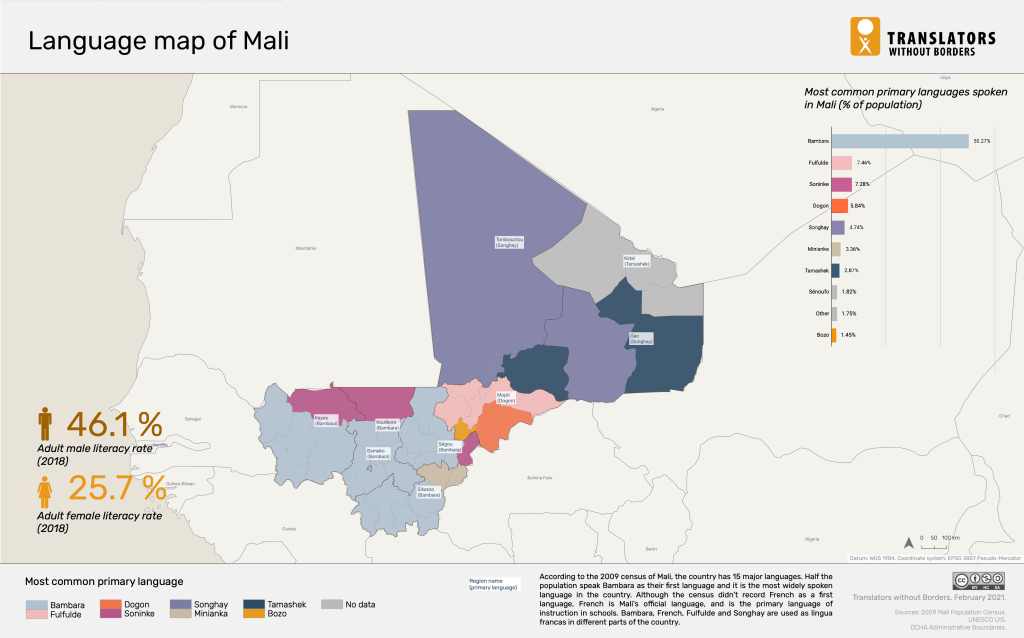
Static map of the most common primary languages spoken throughout Mali. Click here to download.
Language use in Somalia: research report
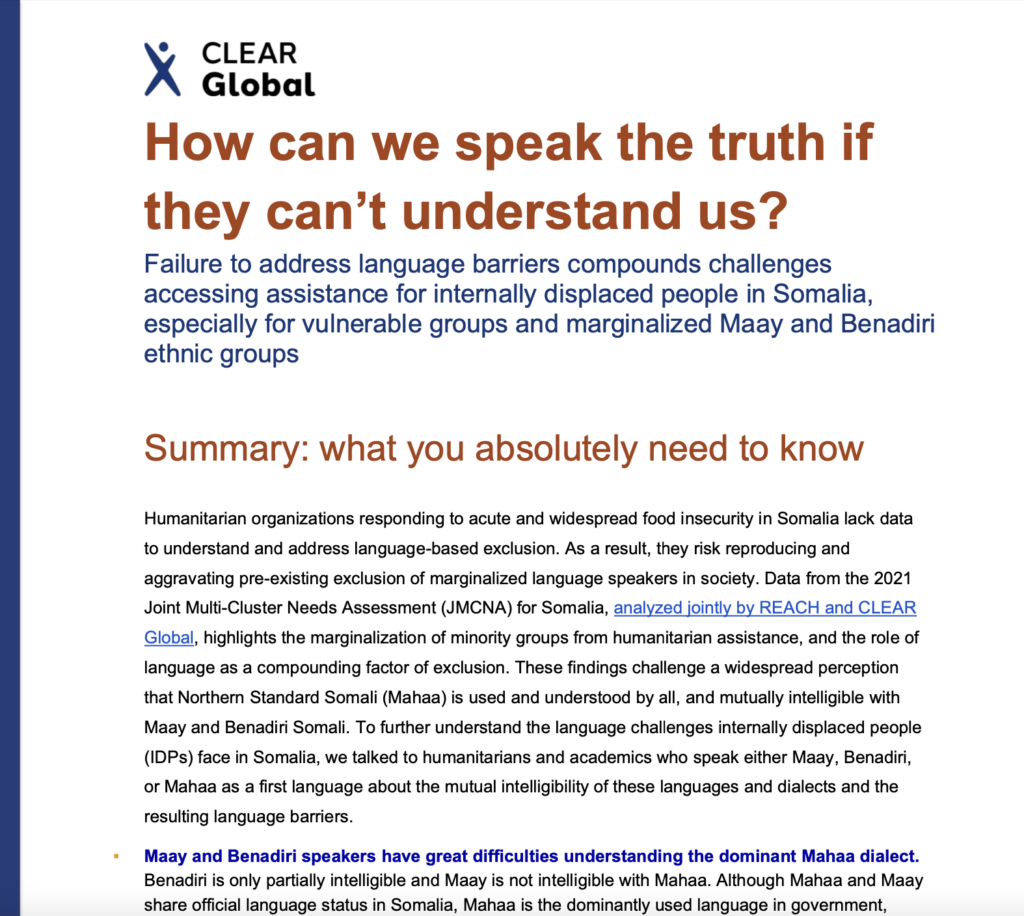
Humanitarian organizations responding to acute and widespread food insecurity in Somalia lack data to understand and address language-based exclusion. Read our report and recommendations for responding organizations – click to view and download (English). Together with Minority Rights Group International and others, we also researched how far Maay Somali speakers understand critical health information in […]