Fuego volcano eruption Guatemala – Crisis language map
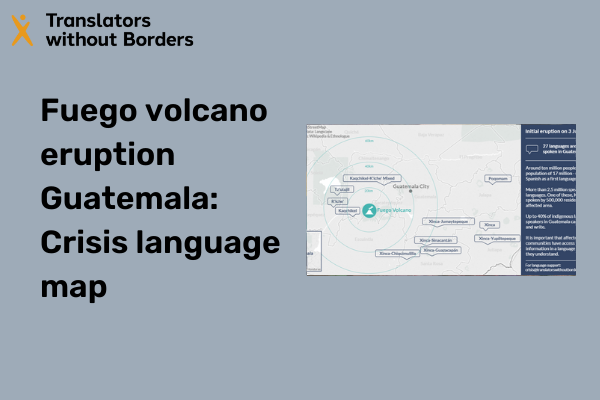
Erupción del Volcán de Fuego, Guatemala – Mapa lingüístico de la crisis en español On 3 June 2018, the Fuego volcano, 40 km from Guatemala City, erupted. Preliminary reports from CONRED, the national disaster authority, recorded 65 people killed and close to 2,000 people in shelters. More than 1.7 million people have been indirectly affected by the […]
Ebola outbreak in Beni Territory, DRC – Crisis language map
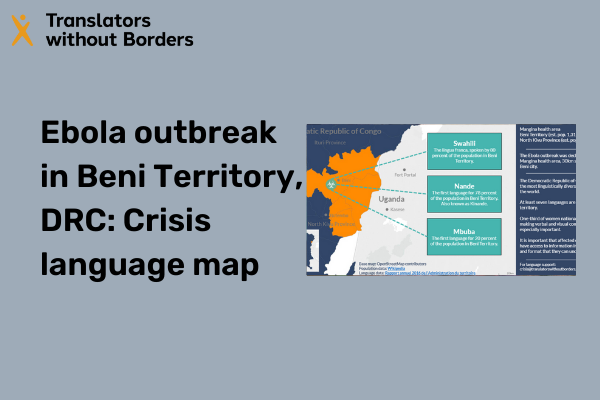
Carte linguistique en français On 1 August 2018, the government of the Democratic Republic of Congo (DRC) declared an outbreak of Ebola virus in Mangina, North Kivu Province. Four cases of Ebola had been confirmed by laboratory testing, and 20 people had died of hemorrhagic fever in the area. Ongoing insecurity in the area may […]
Communications dashboard: Internally displaced people in Northeast Nigeria
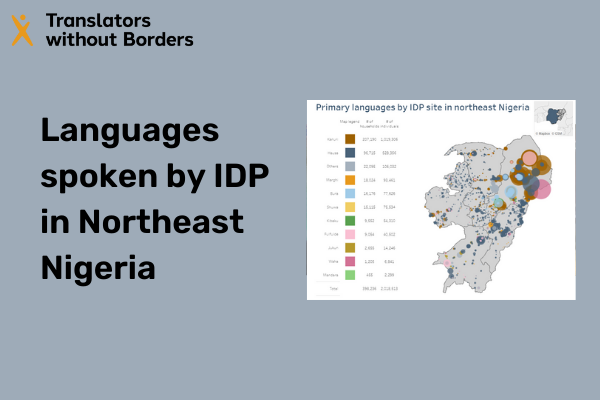
This dashboard is an interactive tool to help humanitarian organizations better plan their communication strategies and language support. Developed by Translators without Borders, in cooperation with the International Organization for Migration’s (IOM) Displacement Tracking Matrix (DTM) team in Maiduguri, the dashboard can help aid workers make data-informed decisions to communicate with and support the crisis-affected […]
TWB glossary for Northeast Nigeria
This multilingual glossary is designed to help humanitarian staff, interpreters, and translators working with crisis-affected people in northeast Nigeria. Using consistent, accurate, respectful and easily understood words in local languages is essential when conveying important humanitarian terms and potentially life-saving information. The glossary is organized thematically, with a focus on protection, housing, land and property […]
Papua New Guinea earthquake – Crisis language map
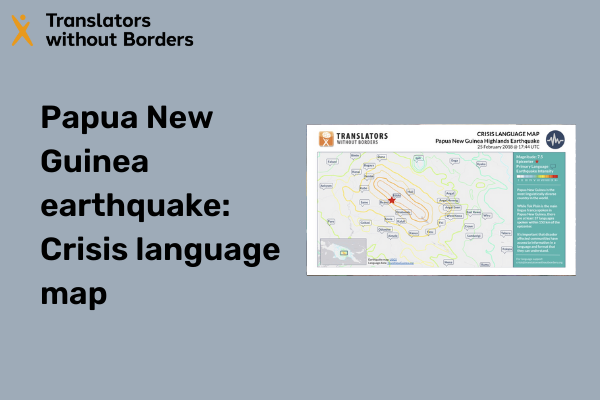
On 25 February 2018, a M7.5 earthquake struck the island of Papua New Guinea, displacing over 26,000 residents and leaving 270,000 people in need of assistance. At least 53 people have died as a result of landslides and structural collapse. Women, men, and children who have had to leave their homes speak a variety of […]
TWB services for the European refugee response
Since September 2015, Translators without Borders has deployed its Words of Relief response program to support local and international humanitarian agencies working to assist refugees and migrants arriving in Europe. Since the response began, Rapid Response Teams in Arabic, Farsi, Greek, Kurdish, and Urdu have provided over 800,000 words of immediate, high-quality translations in multi-media […]
TWB glossary for Myanmar
This glossary includes terminology for Rohingya, Rakhine, Myanmar, and English. View and use the glossary here.
TWB glossary for COVID-19
We are identifying key terminology that people use to talk about COVID-19 as well as commonly used technical terms to develop a multilingual, plain-language glossary. The glossary is designed to assist field workers and interpreters engaging with communities to raise awareness about COVID-19. It aims to improve communication between responders and affected communities by providing […]
TWB glossary for the Democratic Republic of Congo
Clear information in the right language and consistent use of terminology helps minimize confusion and improves communication. This glossary will help anyone working on the humanitarian response in the Democratic Republic of Congo (DRC) to communicate more effectively. The glossary contains health, nutrition, and bereavement terminology in French, Congolese Swahili, Lingala, Nande Mongo, Ngombe, Tshiluba, […]
How to consider language when researching sexual exploitation, abuse, and sexual harassment (SEAH)
This how-to note details why language is important in researching Sexual Exploitation, Abuse and Sexual Harassment (SEAH), what can go wrong and how to mitigate the risks and how to ensure we use the right language when talking about SEAH and safeguarding in research. Download the document in: Amharic, Arabic, English, French, Hausa, Swahili and […]