
Annual Report 2024
Read the 2024 Annual Report now. 2024 was a year of maturity for the organization. We are moving toward more sustainable income sources and less dependency on short-term humanitarian funding. This has meant focusing our work. It seemed that the rest of the world started to understand the importance of language data; the rise of […]
2024 Mpox outbreak response: How to address language and communication barriers to maximize the reach of mpox risk communication
Download this brief as a pdf. In a public health emergency, people need clear, accessible communication to take action and keep themselves safe. But a lack of language awareness can harm the reach and effectiveness of the response. As learning from the Covid-19 and Ebola responses has shown, language and communication barriers: Reduce access to […]
Speaking the language of assistance in DRC
Speaking the language of assistance: Comprehension of language and terms used in Multi-Sector Needs Assessments in DRC To support humanitarian response in the Democratic Republic of Congo (DRC), REACH conducts numerous assessments each year independently and in collaboration with other humanitarian organizations, including the annual Multi-Sector Needs Assessment (MSNA), carried out with WFP and […]
Communicating about gender and violence in Ukraine
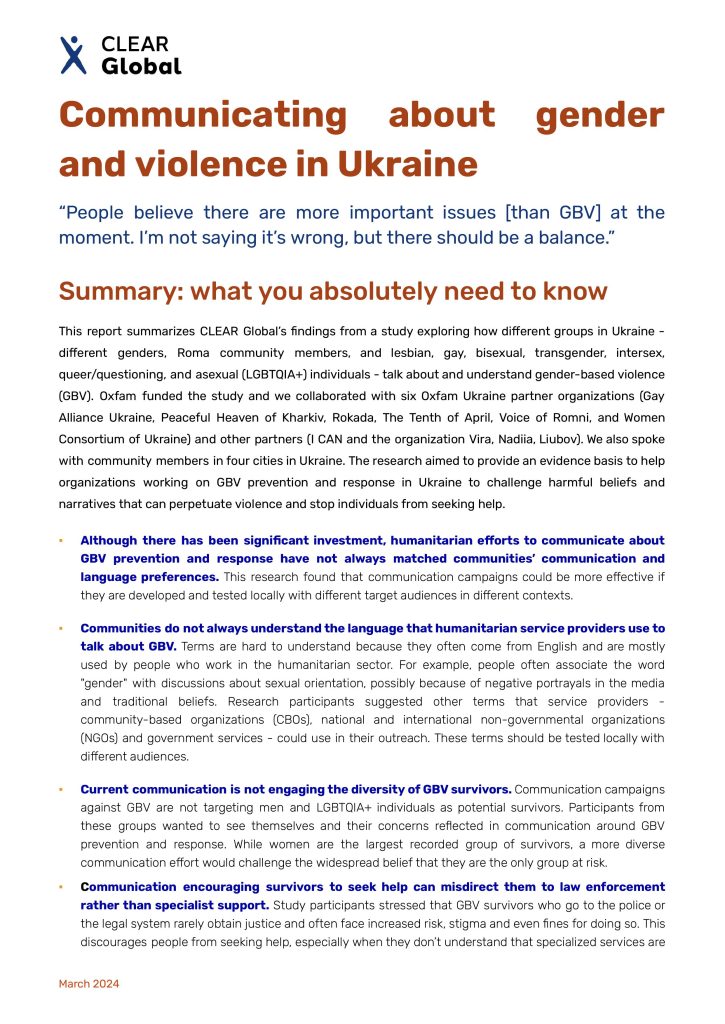
Communicating about gender and violence in Ukraine In situations of conflict, the risk of gender-based violence (GBV) can increase and survivors need to know how and where to find help. Clear, appropriate and safe communication from service providers is critical to ensure people can find the services they need and talk about what they experienced. […]
Language and digital humanitarian action
Language and digital humanitarian action Report: The state of inclusion and exclusion for marginalized language speakers in digital humanitarian services When most people directly affected by humanitarian emergencies don’t speak a powerful language, how can they be heard and get the information they need? While humanitarian services continue to digitize, only a handful of […]
Why language inclusion matters for effective climate action
Why language inclusion matters for effective climate action The climate crisis is the world’s most urgent sustainability challenge – yet those most affected are often the least able to speak out. As the climate crisis worsens, we need solutions created by and for people most at risk. Click to read.
Why language inclusion matters for sexual and reproductive health and rights (SRHR)
Why language inclusion matters for sexual and reproductive health and rights (SRHR) Effective SRHR services support the right to health, promote gender equality, and reduce vulnerability for people experiencing marginalization. Yet without language awareness, these services never reach some of those most in need. Download the document.
Language technology for humanitarian action
Language technology for humanitarian action How collaborating on language technology development could reduce the digital language gap Up to four billion people globally face digital or language exclusion. Developing language technology for humanitarian and development use represents a significant opportunity to reduce exclusion across the aid sector and beyond. This brief proposes a collective […]
Insights into community needs and wishes – eastern DRC
Insights into community needs and wishes – eastern DRC People need effective humanitarian reporting systems for sexual exploitation and abuse in eastern Democratic Republic of Congo (DRC). And they need practical information in languages they understand. Read the report in English. Read the report in French. Read the report in Congolese Swahili. Preview […]
Language AI for social impact – a Playbook on how to use language technology for community engagement
This playbook is a key resource for program and technology partners. It will help you understand how to use and develop language technology and give you practical guidance to do so. The focus is on low-resource and minority languages. The digital world is expanding, and language technology can help bridge gaps in communication and give […]