
Chichewa synthetic voice dataset, TTS models, ASR models
Below is a curated collection of open resources for text-to-speech (TTS), automatic speech recognition (ASR), and synthetic voice datasets in the Chichewa language. Text-to-Speech (TTS) Models Explore our collection of Chichewa TTS models, including XTTS and other multilingual models fine-tuned for natural-sounding Chichewa speech. View Chichewa TTS Models on Hugging Face Automatic Speech Recognition (ASR) Models […]
Hausa synthetic voice dataset, TTS models, ASR models
Below is a curated collection of open resources for text-to-speech (TTS), automatic speech recognition (ASR), and synthetic voice datasets in the Hausa language. Text-to-Speech (TTS) Models Explore our collection of Hausa TTS models, including XTTS and other multilingual models fine-tuned for natural-sounding Hausa speech. View Hausa TTS Models on Hugging Face Automatic Speech Recognition (ASR) […]
Dholuo synthetic voice dataset, TTS models, ASR models
Below is a curated collection of open resources for text-to-speech (TTS), automatic speech recognition (ASR), and synthetic voice datasets in the Dholuo language. Text-to-Speech (TTS) Models Explore our collection of Dholuo TTS models, including XTTS and other multilingual models fine-tuned for natural-sounding Dholuo speech. View Dholuo TTS Models on Hugging Face Automatic Speech Recognition (ASR) […]
Marma TTS and text data resources
Text data This dataset contains sentences in the Marma language (ISO code: rmz), with both original and normalized forms. The dataset is designed to support language technology development for the Marma language, a Tibeto-Burman language spoken primarily by the Marma people in Bangladesh and Myanmar. This dataset was created as part of a project funded […]
Language use in Somalia: research report
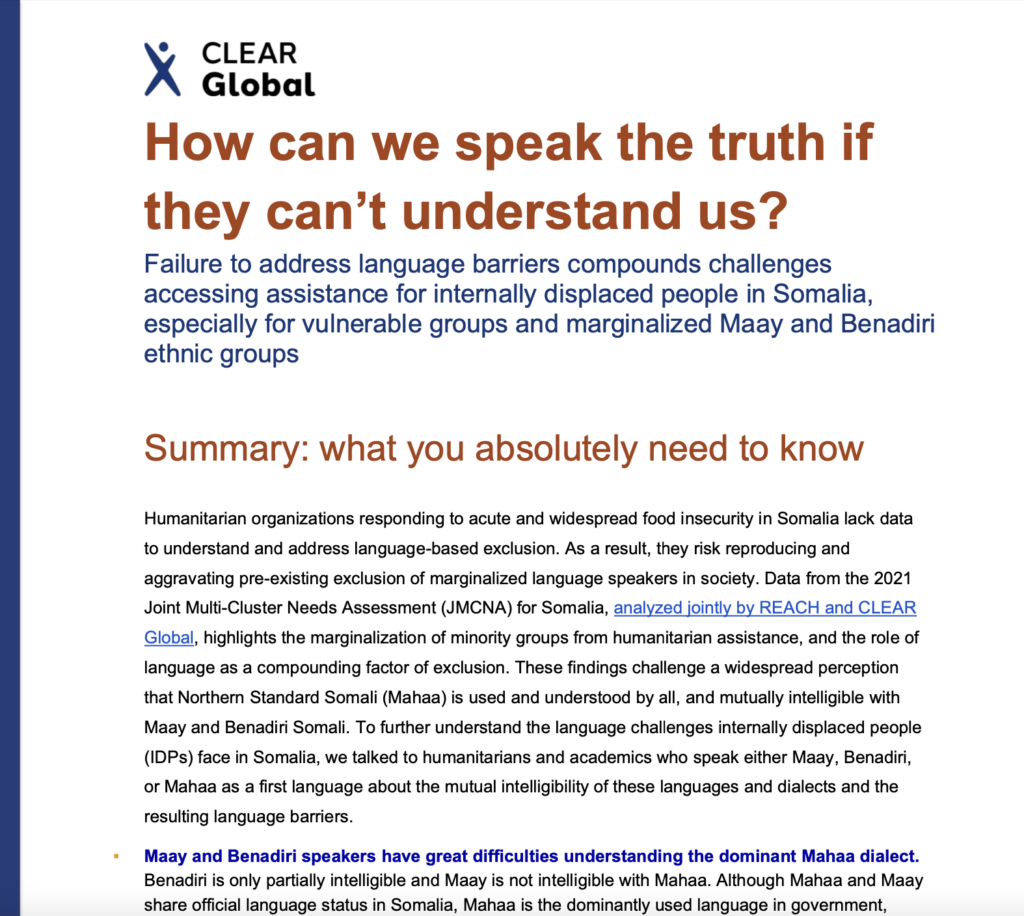
Humanitarian organizations responding to acute and widespread food insecurity in Somalia lack data to understand and address language-based exclusion. Read our report and recommendations for responding organizations – click to view and download (English). Together with Minority Rights Group International and others, we also researched how far Maay Somali speakers understand critical health information in […]
Pakistan floods information gap research report – English
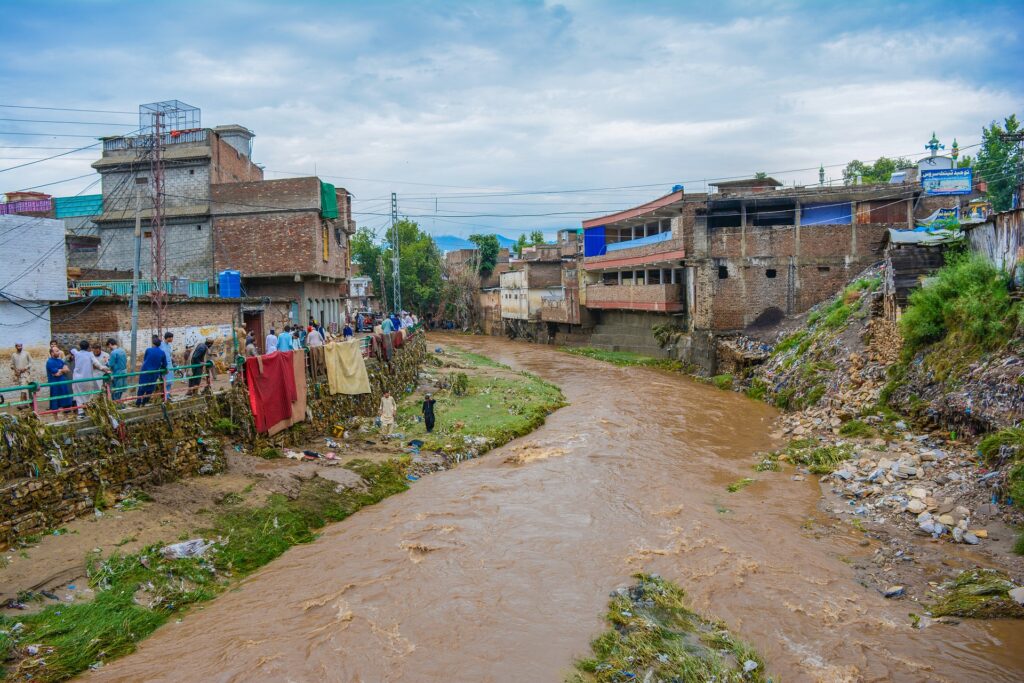
Facing floods in Pakistan A dangerous information gap – read the report. Flood-affected communities in Sindh and South Punjab lack the information they need to access assistance, avoid further harm, and prepare for future floods. In February 2023, CLEAR Global and Pattan Development Organisation studied people’s comprehension of flood-related information materials. To ensure marginalized language speakers […]
Pakistan Languages, Flood Risks, and Cellphone Infrastructure – key insights
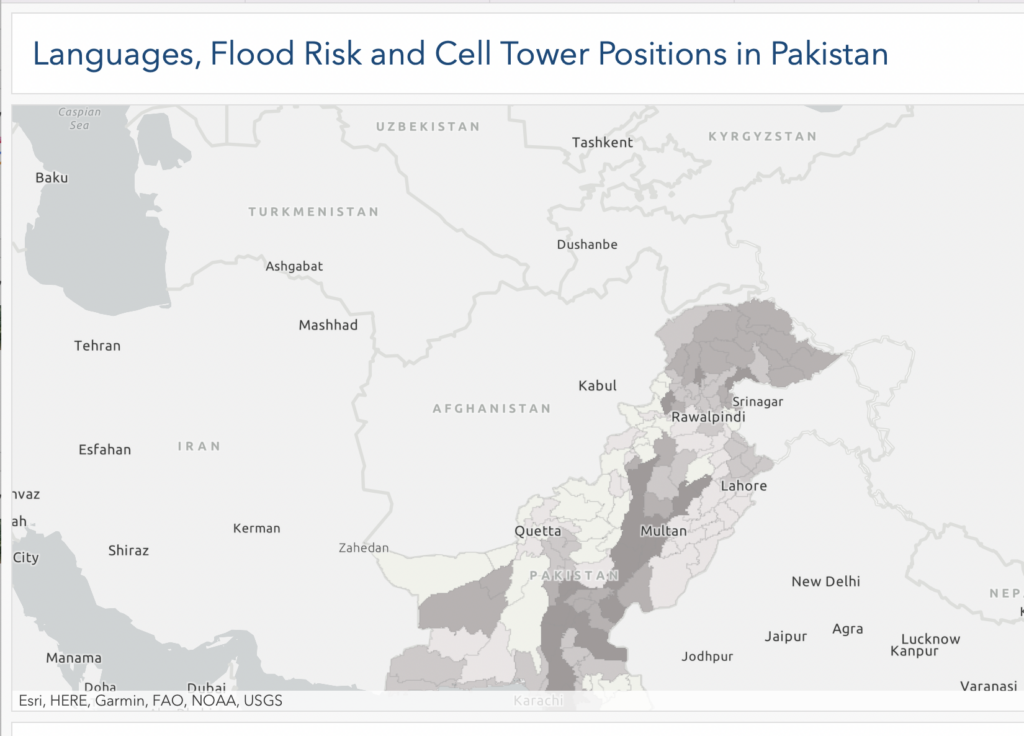
Areas at high risk of flooding face varied language and communication challenges. To inform better planning and response, we compiled data on flood risk, cell phone infrastructure and language use in an interactive map that highlights important gaps and barriers to effective communication with at-risk populations. Read key insights here.
Language use in Somalia: Quantitative research findings
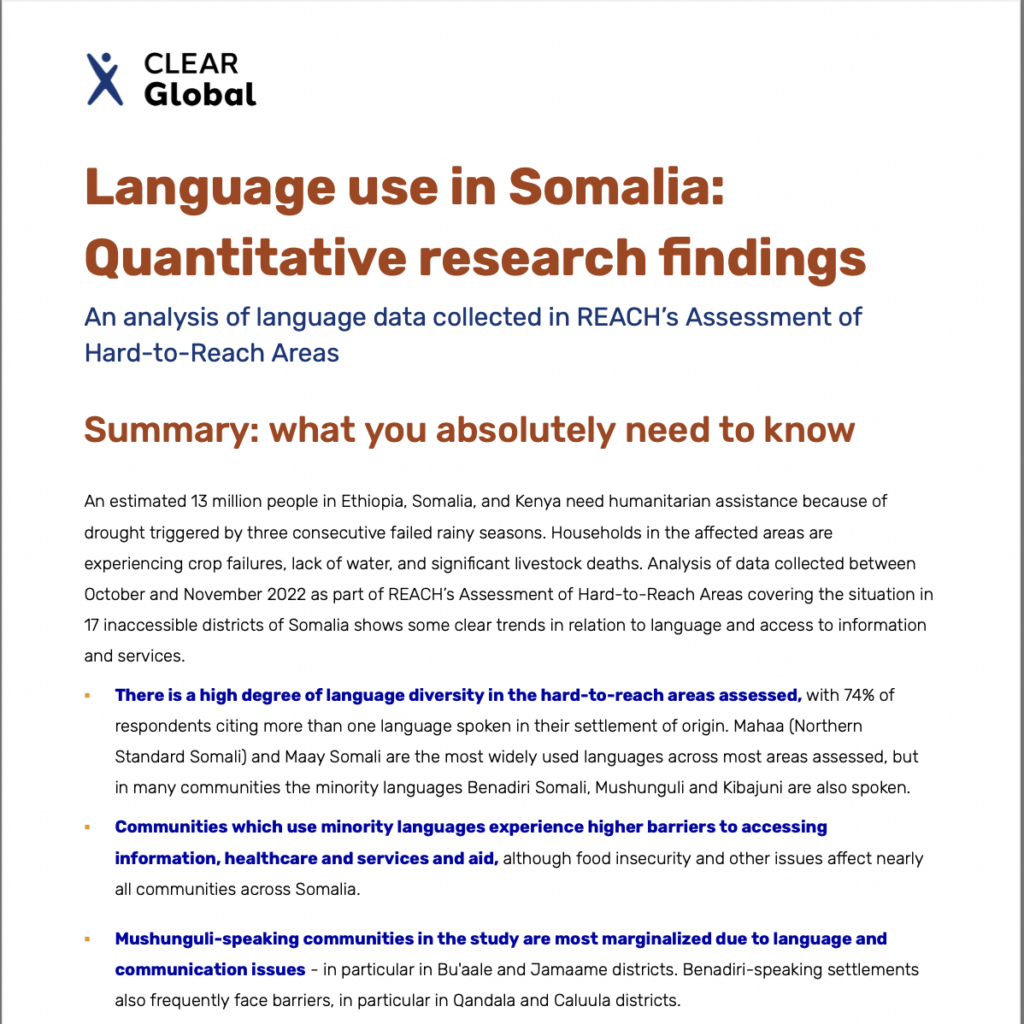
An analysis of language data collected in REACH’s Assessment of Hard-to-Reach Areas in Somalia. Click to read and download the report in English. These findings challenge a widespread perception that Northern Standard Somali (Mahaa) is used and understood by all, and mutually intelligible with Maay and Benadiri Somali. To further understand the language challenges internally displaced […]
Tackling language-based exclusion in the Horn of Africa hunger crisis: Lessons from Somalia
Facing the worst droughts in over 40 years, more than 37 million people in the Horn of Africa are experiencing acute hunger. They need urgent humanitarian aid – healthcare, food, water supplies, and lifesaving information in the right language. CLEAR Global and REACH studied how language affects effective humanitarian response in the Horn of Africa […]
A framework for the ethical use of advanced data science methods in the humanitarian sector
This framework is designed to highlight key ethical considerations, and to provide a practical guide for exploring or implementing advanced data science methods to support humanitarian outcomes. It serves to help humanitarian work stakeholders, and other private and civil actors learn how to ethically and responsibly use advanced data science methods in humanitarian work. View […]