Finding the right words: PSEAH terminology testing in Dohuk and Kirkuk, Iraq
In partnership with the International Organization for Migration, we developed a glossary of terms on preventing sexual exploitation, abuse and harassment in three Kurdish dialects: Sorani, Badini, and Kurmanji. As part of the glossary development, CLEAR Global and IOM conducted focus group discussions (FGDs) to test comprehension of sensitive and potentially confusing PSEAH-related terms. FGDs […]
Majhis’ role in sharing information in the camps
View our Majhis’ role in sharing information in the camps research report in a new tab here.
Imams’ role as sharers of information in the camps
View our Imams’ role as sharers of information in the camps research report in a new tab here.
Complaint and feedback mechanisms are missing the voices of women and people with restricted mobility
View our Complaint and feedback mechanisms are missing the voices of women and people with restricted mobility research report in a new tab here.
How Rohingya people think and talk about mental health
. View our How Rohingya people think and talk about mental health research report in a new tab here.
Rohingya information preferences and perspectives
View the Rohingya information preferences and perspectives research report in a new tab here.
Philippines Super Typhoon Rai (“Odette”) – Crisis language map
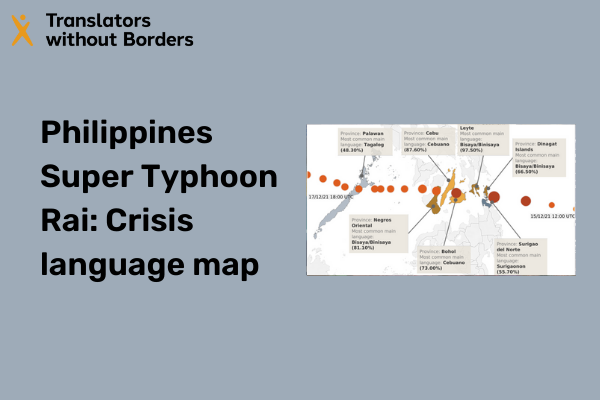
(Click here to open in a new window.) Typhoon Rai made an initial landfall in Siargao Island, province of Surigao del Norte in Caraga region, northern Mindanao on 16 December 2021. It carried gusts up to 270 km/h with maximum sustained winds of 195 km/h near the centre making it the strongest storm to make […]
Bangladesh and Myanmar: language needs across borders
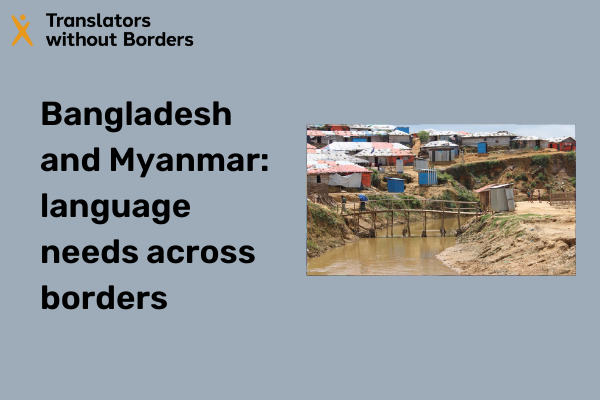
The Rohingya are marginalized in Myanmar society, as reflected in their lack of legal status and recognition as citizens. Across the border in Bangladesh, they are also unable to participate fully in society due to their lack of legal status and recognition as refugees. In both contexts, language barriers reinforce that exclusion. In March 2019, […]
The language lesson: What we’ve learned about communicating with Rohingya refugees
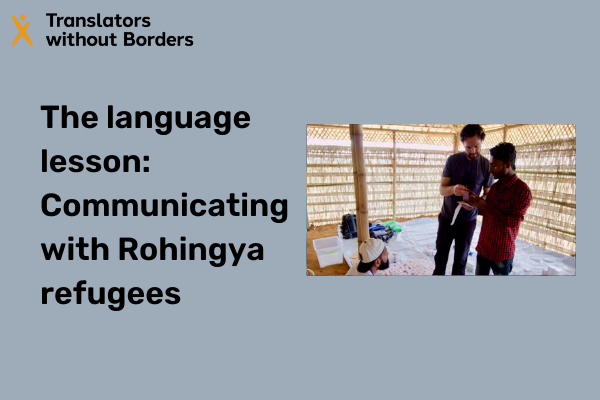
Rohingya refugees have a right to information and two-way communication in their own language, in a format they understand, and through channels they prefer and trust. In the past year, access to information has improved in the Rohingya refugee response as a result of an increased humanitarian focus on communicating with communities. Yet language barriers […]
The language of leadership: The words that define how majhis are seen and understood in the Rohingya refugee response